

Myo-Inositol: The “Quiet” Nutrient improving Fertility Care.
- Pharm. Onyehalu Jennifer

- May 22
- 4 min read
Introduction
In recent years, myo-inositol has gained major attention in reproductive health, hormonal balance, and metabolic wellness. Once considered a lesser-known nutrient, it is now widely discussed in relation to conditions like Polyendocrine Metabolic Ovarian Syndrome (PMOS), fertility challenges, insulin resistance, and menstrual irregularities.
Many women struggling with irregular cycles, ovulation problems, acne, or difficulty conceiving are now hearing about myo-inositol from doctors, pharmacists, fertility clinics, and online health communities. But what exactly is it, and why has it become so important?
What Is Myo-Inositol?
Myo-inositol is a naturally occurring carbohydrate compound often referred to as a member of the vitamin B-complex family, although it is not officially classified as a vitamin. It is found naturally in the body and in foods such like fruits, beans, whole grains, nuts, seeds...
The body uses myo-inositol in several important cellular processes, particularly those involving:
Insulin signaling
Hormonal regulation
Cell communication
Egg development and ovarian function
Brain and nerve signaling
Among the nine forms of inositol that exist naturally, myo-inositol is the most abundant and most widely studied.

Why Is Myo-Inositol So Popular?
Myo-inositol became especially popular because of its potential benefits in managing PMOS.
PMOS is one of the most common hormonal disorders affecting women of reproductive age. Research has shown that many women with PMOS have abnormalities in insulin signaling. Since myo-inositol helps improve insulin sensitivity, it may indirectly support better hormonal balance and ovarian function.
How Myo-Inositol Works in the Body
Myo-inositol acts as a messenger in cells, helping hormones communicate effectively with tissues and organs.
One of its most important roles involves insulin.
Insulin Regulation
Insulin is the hormone responsible for helping glucose enter cells for energy. When the body becomes resistant to insulin, blood sugar levels can rise, leading to metabolic disturbances.
Myo-inositol helps improve the body’s response to insulin, which may:
Reduce insulin resistance
Improve blood sugar control
Lower circulating insulin levels
Support healthier hormone production
This is especially important because high insulin levels can stimulate the ovaries to produce excess androgens (male hormones), worsening PMOS symptoms.
Myo-Inositol and Fertility
One of the biggest reasons women use myo-inositol is its potential role in fertility support.
Improved Ovulation
Women with PMOS often experience irregular or absent ovulation. Studies suggest that myo-inositol may help restore more regular ovulation patterns by improving insulin sensitivity and hormone balance.
Egg Quality
Research also suggests that myo-inositol may support better egg quality, particularly in women undergoing fertility treatments such as IVF.
Healthy egg development is essential for successful fertilization and pregnancy.
Menstrual Cycle Regulation
Some women report more predictable menstrual cycles after using myo-inositol consistently for several months.
Myo-Inositol During Fertility Treatment
Fertility clinics increasingly include myo-inositol in supportive treatment plans for women with PMOS or ovulatory dysfunction.
Potential benefits during assisted reproductive treatments may include:
Better ovarian response
Improved egg maturation
Reduced risk of ovarian hyperstimulation syndrome (OHSS)
Enhanced embryo quality
However, responses vary among individuals, and supplementation should always be guided by a healthcare professional.
D-Chiro-Inositol: The Metabolic Regulator
D-chiro-inositol (DCI) is the second most prevalent type of inositol. It is a downstream metabolite of myo-inositol. It is particularly involved in:
Insulin-mediated glucose uptake
Glycogen synthesis
Reduction of circulating insulin levels
Modulation of androgen production
By improving insulin sensitivity, DCI indirectly helps reduce hyperinsulinemia-driven androgen excess, which is a key feature in many PCOS cases.
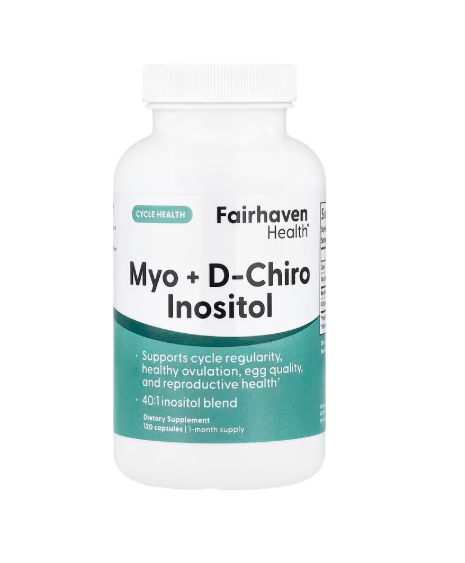
Why Myo-Inositol and D-Chiro-Inositol Are Used Together
Although both compounds are important, they perform different and complementary roles:
Myo-inositol → primarily supports ovarian function and egg quality
D-chiro-inositol → primarily supports insulin and metabolic function
In healthy physiology, the body converts myo-inositol into D-chiro-inositol in a tightly regulated manner. This balance is tissue-specific and not uniform across the body.
This is why supplementation with only one form may not fully replicate natural physiology.
The Importance of the 40:1 Ratio
One of the most important findings in inositol research is that in healthy human plasma, the approximate physiological ratio of myo-inositol to D-chiro-inositol is about 40:1.
This ratio has become the standard in many clinical supplements because:
It reflects natural biological balance
It supports both ovarian and metabolic functions
It avoids excessive D-chiro-inositol exposure in ovarian tissue
It preserves egg quality while improving insulin sensitivity
Why Excess D-Chiro-Inositol Can Be a Problem
While DCI is beneficial for insulin metabolism, excessively high levels in the ovary may:
Reduce aromatase activity
Impair follicular development
Negatively affect oocyte quality in some contexts
This is why isolated high-dose DCI is generally avoided in fertility-focused treatment.
Important Considerations
While myo-inositol (with D-chiro-inositol) has shown promising results, it is not a miracle cure.
Not everyone responds the same way, and treatment success often depends on multiple factors, including:
Diet
Lifestyle
Underlying hormonal conditions
Weight management
Overall reproductive health
It should be viewed as part of a broader healthcare strategy rather than a standalone solution.
Conclusion
Myo-inositol has emerged as one of the most talked-about supplements in women’s reproductive and metabolic health. Its role in insulin signaling and hormonal regulation makes it particularly valuable in conditions like Polyendocrine Metabolic Ovarian Syndrome, where metabolism and fertility are closely linked.
Although it is not a guaranteed solution, growing scientific evidence suggests that myo-inositol may help improve ovulation, menstrual regularity, insulin sensitivity, and fertility outcomes for many women.
As with any supplement, proper medical guidance remains important to ensure safe and effective use.
REFERENCES



Comments